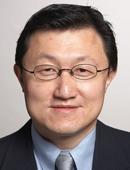
Zhenyu Yue

  • ASSOCIATE PROFESSOR Neurology
  • ASSOCIATE PROFESSOR Neuroscience
Print ProfilePrint Profile

Biography

    Specific Research Interests:
    Molecular mechanisms of neurodegeneration; Molecular basis of Parkinson's disease pathogenesis; Regulation of autophagy in neurons; Axonal transport and degeneration; Genetic mouse models for neurodegenerative diseases.

    Other Web Sites
    Yue Laboratory

Research

Molecular and Cellular Process of Autophagy
Autophagy is a highly regulated cell "self-eating" pathway. The fundamental process of autophagy involves packing, trafficking, and delivering of macromolecules and organelles through autophagic vacuoles to lysosomes for degradation. Autophagy is a ubiquitous cellular process that is linked to a variety of physiological functions and pathological conditions in mammals. Our goal is to understand the molecular and cellular mechanism of autophagy. We are currently using a research paradigm that integrates several multidisciplinary approaches, including cell imaging, protein biochemistry, structure biology, and genetic animal models, in order to dissect the autophagic process in vitro and in vivo. Our particular interest is to characterize the dynamic composition and specific function of autophagy protein complexes. By using mammalian autophagy as a model system, we aim to provide mechanistic insight into the cellular trafficking network that is important for the understanding of various neuronal functions and pathogenic processes associated with Parkinson's disease and Alzheimer's disease.

Neuronal Autophagy in Axonal and Neuronal Degeneration
Autophagy plays an important role in the maintenance of cellular homeostasis in neurons. The impairment of autophagy in the CNS contributes to accumulation of ubiquitinated proteins, axonal dystrophy (axonopathy), and neurodegeneration. We aim to investigate the detailed mechanism of autophagy in trafficking and degradation of ubiquitinated protein aggregates, as well as the interaction of autophagy with the axonal transport process. This study is intended to gain insight into the molecular mechanisms whereby autophagy participates in the pathogenic processes of several major human neurological disorders such as Parkinson's disease, Huntington's disease, Amyotrophic lateral sclerosis and Alzheimer's disease, and to provide new avenues for both diagnosis and targets of therapeutic treatment of those diseases.

Molecular mechanisms for the pathogenesis of Parkinson's disease
Parkinson's disease (PD) is a movement disorder characterized clinically by rigidity, resting tremor and bradykinesia. The pathological features of PD include nigral degeneration and the deposit of Lewy bodies comprising mainly fibril alpha-synuclein. Emerging evidence links LRRK2 to the most common familial PD and also suggests that LRRK2 is a central control protein that governs multiple signaling pathways. Our short-term goal is to dissect LRRK2-mediated cellular pathways and to elucidate the pathogenic mechanisms of the familial PD mutations of LRRK2 (such as R1441G and G2019S). We are currently engaged in several research programs, including genetic mouse models of PD, electrophysiology, neurochemistry, animal behavior, neuropathology, enzyme chemistry, protein structure/functions, and drug discovery. Our long-term goal is to translate our knowledge from our basic mechanistic studies to the identification of the drug targets and to the development of potential drugs for the treatment of PD.

Publications

Zhong Y, Wang QJ, Li X, Chait BT, Heintz N, Yue Z. Distinct Regulation of Autophagic Activity by Novel Components Atg14L and Rubincon in Beclin 1-Vps34/phosphatidylinositol (PtdIns) 3-kinase complex. Nature Cell Biology 2009;.

Arsov I, Li X, Matthews G, Coradin J, Hartmann B, Simon AK, Sealfon SC, Yue Z. BAC-mediated transgenic expression of fluorescent autophagic protein Beclin 1 reveals a role for Beclin 1 in lymphocyte development. Cell Death and Differentiation 2008; 15(9): 1385-1395.

Tang G, Yue Z, Hagemann T, Messing A, Goldman JE. Expression of Alexander Disease-mutant GFAP Stimulates Autophagy through p38 MAPK and mTOR signaling Pathways. Human Molecular Genetics 2008; 17(11): 1540-1555.

Komatsu M, Waguri S, Koike M, Sou YS, Ueno T, Hara T, Mizushima N, Iwata J, Ezaki J, Murata S, Hamazaki J, Nishito Y, Iemura S, Natsume T, Yanagawa T, Uwayama J, Warabi E, Yoshida H, Ishii T, Yue Z, Uchiyama Y, Kominami E, Tanaka K. Homeostatic levels of p62 control cytoplasmic inclusion body formation in autophagy-deficient mice. Cell 2007; 131(6): 1149-1163.

Ullman E, Fan Y, Stawowczyk M, Chen HM, Yue Z, Zong WX. Autophagy promotes necrosis in apoptosis-deficient cells in response to ER stress. Cell Death and Differentiation 2008 Feb; 15(2): 422-425.

Li X, Tan YC, Poulose S, Olanow CW, Huang XY, Yue Z. Leucine-Rich Repeat Kinase 2 (LRRK2)/PARK8 Possesses GTPase Activity That is Altered in Familial Parkinsons' Disease R1441C/G Mutants. Journal of Neurochemistry 2007; 103(1): 238-247.

Komatsu M, Wang Q, Holstein G, Kominami E, Chait BT, Tanaka K, Yue Z. Essential role for autophagy protein Atg7 in the maintenance of axonal homeostasis and the prevention of axonal degeneration. Proc. Natl. Acad. Sci. USA 2007; 104(36): 14489-14494.

Wang Q, Ding Y, Kolhz S, Mizushima N, Chait B, Zhong Y, Heintz N, Yue Z. Induction of autophagy in axonal dystrophy and degeneration. Journal of Neuroscience 2006; 26(31): 8057-8068.

Yue Z, Jin V, Yang C, Levine A, Heintz N. Beclin1, an autophagy gene essential for early embryonic development, is a haplo-insufficient tumor suppressor. Proc. Natl. Acad. Sci. USA 2003; 100(25): 15077-15082.

Yue Z, Horton A, Bravin M, DeJager PL, Selimi F, Heintz N. A 2) and Autophagy:S2 Glutamate Receptor (GluRSNovel Protein Complex linking the Implications for Neurodegeneration in Lurcher Mice. Neuron 2002; 35(9): 921-933.

Industry Relationships

Physicians and scientists on the faculty of the Icahn School of Medicine at Mount Sinai often interact with pharmaceutical, device and biotechnology companies to improve patient care, develop new therapies and achieve scientific breakthroughs. In order to promote an ethical and transparent environment for conducting research, providing clinical care and teaching, Mount Sinai requires that salaried faculty inform the School of their relationships with such companies.

Below are financial relationships with industry reported by Dr. Yue during 2012 and/or 2013. Please note that this information may differ from information posted on corporate sites due to timing or classification differences.

Royalty Payments:

  • Genentech, Inc.; Pfizer Inc.

Equity (Stock or stock options valued at greater than 5% ownership of a publicly traded company or equity of any value in a privately held company)

  • Autophagen Bioscience Inc. (ABI)

Mount Sinai's faculty policies relating to faculty collaboration with industry are posted on our website at http://icahn.mssm.edu/about-us/services-and-resources/faculty-resources/handbooks-and-policies/faculty-handbook. Patients may wish to ask their physician about the activities they perform for companies.

Edit profile in Sinai Central

Address

Annenberg Building Floor 14 Room 14-66
1468 Madison Avenue
New York, NY 10029


Address

CSM aka Primary Care Building Floor 9th floor Room 106
1470 Madison Avenue
New York, NY 10029


Address

Annenberg Building Floor 14 Room 62, 64
1468 Madison Avenue
New York, NY 10029