
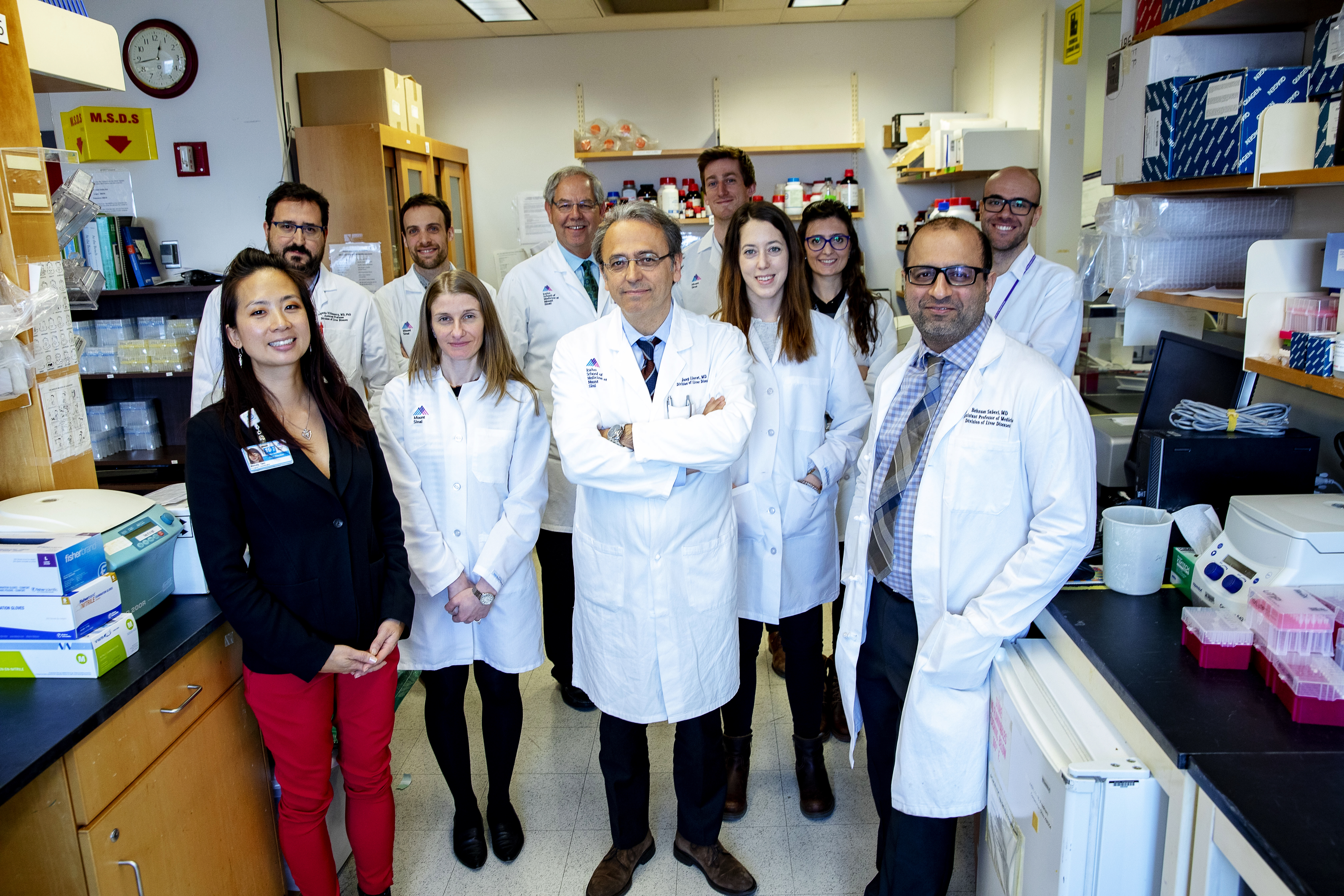
The strategic position of Mount Sinai and its partners in the US and Europe has enabled the establishment of a translational program which is intended to uncover the molecular pathogenesis of liver cancer as a basis to improve patients’ management. This includes molecular classification and prognostic genomic predictors, identification of candidate oncogenes or tumor suppressors and validation of novel molecular targets in sophisticated experimental models. This international and collaborative group has combined the resources of its co-investigators to develop a magnificent collection of more than 2,000 tissue and serum samples that provides the investigators with unique sets of genomic, proteomic and epigenetic data. Along with such powerful resource, a multidisciplinary group of molecular biologists, pathologists, surgeons, physicians and experts in genomics has contributed to the current knowledge of liver cancer with several scientific achievements and successful completion of several projects supported through private and public funding grants [the Samuel Waxman Cancer Research Foundation, the Bendheim Family Trust and NIH funding (U.S. National Institute of Diabetes and Digestive and Kidney Diseases, National Cancer Institute, and European Commission Grants) among others.
Specifically, the Liver Cancer Laboratory has been developed to:
- Identify gene expression profiles and prognostic genomic predictors in primary liver cancers including hepatocellular carcinoma (HCC), intrahepatic cholangiocarcinoma (iCCA) and extrahepatic cholangiocarcinoma (eCCA), mixed hepatocellular-cholangiocarcinoma and fibrolamellar (FLC).
- Understand the molecular pathogenesis of liver cancer and identify novel candidate oncogenes and tumor suppressors.
- Identify and validate drivers of oncogenesis as novel molecular therapeutic targets in sophisticated experimental models.
- Understand the immune components of hepatocellular carcinoma (HCC), the characterization of inflamed tumors, and the identification of immune traits predicting response or primary resistance to immunotherapies
- Explore the specific molecular traits characterizing non-alcoholic steatohepatitis (NASH) HCC, and the mechanism of immune response and evasion in this etiology