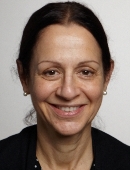
Specific Clinical/Research Interests: Tumor immunology; T cells; immunotherapy and immunosuppression
Summary of Research Studies: Maintaining established tumor immunity is important to prevent the growth of nascent tumors and to sustain responses induced naturally or by immunotherapy. Although it was thought that the major reason the immune system fails to reject tumors is that they evade detection, more recent evidence has suggested that immune responses made against tumors can be lost before the tumor has been destroyed. Dr. Zier's research interest focuses on regulatory mechanisms that underlie the loss of established anti-tumor immunity. Her lab has shown that as the CMS5 fibrosarcoma grows early anti-tumor immunity wanes. These mice contain T cells that show defects in the TCR signaling pathway. On a functional level, Th1 responses by the T cells decrease, while Th2 responses increase. Most evidence suggests that in contrast to Th2 responses, Th1 responses favor the development of protective immune responses to tumors. Moreover, as tumors grow levels of two types of cells that suppress th! e development of immunity to tumors increase. The first are immature myeloid cells with a Gr1+/CD11b+ phenotype. The second are CD4+/CD25+ T regulatory cells. Current research in the lab is directed at determining the mechanisms responsible for the loss of the protective Th1 response and the development of the deleterious Th2 response, as well as defining the mechanism by which CD4+/CD25+ depletion prevents tumor growth. A particular focus is defining molecules on tumor cells that that may trigger the development of immune suppression. These studies will provide new insights into regulatory mechanisms responsible for the loss of immune responses to solid tumors. This information is crucial to ensure the persistence of natural or therapeutically induced immunity.
Physicians and scientists on the faculty of the Icahn School of Medicine at Mount Sinai often interact with pharmaceutical, device, biotechnology companies, and other outside entities to improve patient care, develop new therapies and achieve scientific breakthroughs. In order to promote an ethical and transparent environment for conducting research, providing clinical care and teaching, Mount Sinai requires that salaried faculty inform the School of their outside financial relationships.
Dr. Zier has not yet completed reporting of Industry relationships.
Mount Sinai's faculty policies relating to faculty collaboration with industry are posted on our website. Patients may wish to ask their physician about the activities they perform for companies.
Physicians and scientists on the faculty of the Icahn School of Medicine at Mount Sinai often interact with pharmaceutical, device, biotechnology companies, and other outside entities to improve patient care, develop new therapies and achieve scientific breakthroughs. In order to promote an ethical and transparent environment for conducting research, providing clinical care and teaching, Mount Sinai requires that salaried faculty inform the School of their outside financial relationships.
Dr. Zier has not yet completed reporting of Industry relationships.
Mount Sinai's faculty policies relating to faculty collaboration with industry are posted on our website. Patients may wish to ask their physician about the activities they perform for companies.