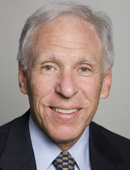
Stuart A. Aaronson

  • FOUNDING CHAIR EMERITUS AND PROFESSOR Oncological Sciences
  • PROFESSOR Medicine
Print ProfilePrint Profile

Education

  • B.S., University of California, Berkeley
    Chemistry

  • University of Cambridge
    Biochemistry

  • M.D., University of California, San Francisco School of Medicine

  • Moffitt Hospital
    Medicine

Biography

    Dr. Aaronson is an internationally recognized cancer biologist, who in early studies established the transformation-competent but replication defective nature of mammalian sarcoma viruses and molecularly cloned many of their oncogenes. He and colleagues implicated retroviral-related oncogenes in human cancer through investigations including the initial detection of their expression in human tumors and critical contributions to the demonstration of their involvement in human cancer. His investigations of the v-sis oncogene established the first normal function of an oncogene and the role of oncogenes in growth factor signaling. His discovery of erbB2 as a v-erbB-related gene amplified in a human breast carcinoma and demonstration of its transforming properties paved the way for targeted therapies directed against its product.

    He isolated KGF (FGF7), a growth factor with novel epithelial cell specificity and demonstrated its involvement in wound repair. Its successful phase III clinical trial by Amgen for treatment of mucositis, recently led the FDA to approve Kepivance (KGF) for treatment of this debilitating side effect of many cancer therapies. Thus, Dr. Aaronson's pioneering discoveries have directly led to new therapies for cancer patients.

    His development and application of stable expression cDNA cloning technology resulted in his identification of new human oncogenes, growth factor receptors, and other genes, which induce transformation or drug resistance. He and colleagues identified the protooncogene product, MET, as the receptor for HGF/Scatter Factor and LRP5/6 as the receptor for a novel Wnt antagonist, Dkk1. This latter discovery paved the way for his recent demonstration with colleagues of a Wnt autocrine transforming mechanism in human malignancies.

    Dr. Aaronson received his M.D. from UCSF in 1966. He joined the National Institutes of Health in 1967 and became Chief of the Laboratory of Cellular and Molecular Biology at the National Cancer Institute in 1977. He joined Mount Sinai in 1994 and is the Jack and Jane B. Aron Professor and Chairman of the Department of Oncological Sciences. He is the recipient of numerous awards including the Distinguished Service Medal from the U.S. Public Health Service, the Rhoads Memorial Award from the American Association of Cancer Research, and the Paul Erhlich Prize from Germany. He is the author of over 530 publications, an inventor on more than 50 patents, and serves on numerous editorial boards and scientific advisory committees.

Awards

  • 2010 -
    Member
    Accademia Nazionale Dei Lincei

  • 1991 -
    Harvey Lecture

  • 1991 -
    Chirone Prize

  • 1990 -
    Milken Award

  • 1989 -
    Paul Ehrlich Prize

  • 1989 -
    PHS Distinguished Service Medal

  • 1982 -
    Rhoads Memorial Award

  • 1982 -
    PHS Meritorious Service Medal

  • 1966 -
    Alpha Omega Alpha

  • 1962 -
    Phi BetaKappa

Research

The laboratory of Stuart A. Aaronson, M.D., focuses on cancer gene discovery and function with emphasis on signaling pathways of growth factors including Wnts, PDGF, KGF (FGF-7), and HGF/scatter factor. His laboratory recently identified autocrine Wnt activation in human tumor cells of several tissue types and is studying the relationship of such tumors to stem/progenitor cells of the same tissues in which Wnt signaling helps to maintain the stem/progenitor phenotype. He is also investigating replicative senescence or permanent growth arrest, which appears to be a cell death program distinct from apoptosis, and which must be overcome to attain the immortalization of tumor cells.His laboratory recently uncovered a novel role of p53 in innate antiviral immunity, increasing the diversity of p53 functions that serve to facilitate host pro-survival mechanisms. The laboratory applies cDNA cloning technology and other functional genomic strategies to discover novel targets for cancer intervention.

Postdoctoral Fellows:

Gal Akiri, Satish Kumar Mungamuri, Igotz Delgado Balzategui, Erica Benson, Martina Kracikova, Huei-Chi Wen

New York Academy of Sciences eBriefing: Digging for Therapeutic Gold

Publications

Mungamuri SK, Benson EK, Wang S, Gu W, Lee SW, Aaronson SA. Tumor suppressor p53-mediated heterochromatin reorganization regulates its cell fate decisions. Nature Structural and Molecular Biology 2011 in press;.

Dai C, Tang Y, Jung SY, Qin J, Aaronson SA, Gu W. Differential effects on p53-mediated cell cycle arrest vs. apoptosis by p90. Proceedings of the National Academy of Sciences of the United States of America 2011 Nov; 108(47).

Muñoz-Fontela C, Pazos M, Delgado I, Murk W, Mungamuri SK, Lee SW, García-Sastre A, Moran TM, Aaronson SA. p53 serves as a host antiviral factor that enhances innate and adaptive immune responses to influenza A virus. Journal of immunology (Baltimore, Md. : 1950) 2011 Dec; 187(12).

Vijayakumar S, Liu G, Rus IA, Yao S, Chen Y, Akiri G, Grumolato L, Aaronson SA. High-frequency canonical Wnt activation in multiple sarcoma subtypes drives proliferation through a TCF/β-catenin target gene, CDC25A. Cancer cell 2011 May; 19(5).

Grumolato L, Liu G, Mong P, Mudbhary R, Biswas R, Arroyave R, Vijayakumar S, Economides AN, Aaronson SA. Canonical and noncanonical Wnts use a common mechanism to activate completely unrelated coreceptors. Genes & development 2010 Nov; 24(22).

Asciutti S, Akiri G, Grumolato L, Vijayakumar S, Aaronson SA. Diverse mechanisms of Wnt activation and effects of pathway inhibition on proliferation of human gastric carcinoma cells. Oncogene 2011 Feb; 30(8).

Singh J, Yanfeng WA, Grumolato L, Aaronson SA, Mlodzik M. Abelson family kinases regulate Frizzled planar cell polarity signaling via Dsh phosphorylation. Genes & development 2010 Oct; 24(19).

Benson EK, Lee SW, Aaronson SA. Role of progerin-induced telomere dysfunction in HGPS premature cellular senescence. Journal of cell science 2010 Aug; 123(Pt 15).

Ide T, Brown-Endres L, Chu K, Ongusaha PP, Ohtsuka T, El-Deiry WS, Aaronson SA, Lee SW. GAMT, a p53-inducible modulator of apoptosis, is critical for the adaptive response to nutrient stress. Molecular cell 2009 Nov; 36(3).

Akiri G, Cherian M, Vijayakumar S, Liu G, Bafico A, Aaronson S. Wnt pathway aberrations including autocrine Wnt activation occur at high frequency in human non-small-cell lung carcinoma. Oncogene 2009; 28: 2163-2172.

Liu G, Grumolato L, Arroyave R, Qiao H, Akiri G, Aaronson S. Canonical Wnts function as potent regulators of osteogenesis by human mesenchymal stem cells. Journal of Cell Biology 2009 April; 185(1): 67-75.

Zhao B, Benson E, Qiao R, Wang X, Kim S, Manfredi J, Lee S, Aaronson S. Cellular senescence and organismal ageing in the absence of p21 CIP1/WAF1 in ku80-/-mice . EMBO 2009;: 71-78.

Ongusaha PP, Qi HH, Raj L, Kim YB, Aaronson SA, Davis R, Shi Y, Liao J, Lee SW. Identification of ROCK1 as an Upstream Activator of the JIP-3 to JNK Signaling Axis in Response to UVB Damage [PMID: 19036714]. Sci Signal 2008 Nov 25; 1(47): ra14.

Industry Relationships

Physicians and scientists on the faculty of the Icahn School of Medicine at Mount Sinai often interact with pharmaceutical, device and biotechnology companies to improve patient care, develop new therapies and achieve scientific breakthroughs. In order to promote an ethical and transparent environment for conducting research, providing clinical care and teaching, Mount Sinai requires that salaried faculty inform the School of their relationships with such companies.

Below are financial relationships with industry reported by Dr. Aaronson during 2012 and/or 2013. Please note that this information may differ from information posted on corporate sites due to timing or classification differences.

Consulting:

  • Curis Inc.

Scientific Advisory Board:

  • R-Pharm

Royalty Payments:

  • Abcam plc.; EMD Chemicals; Swedish Orphan Biovitrum (SOBI)

Mount Sinai's faculty policies relating to faculty collaboration with industry are posted on our website at http://icahn.mssm.edu/about-us/services-and-resources/faculty-resources/handbooks-and-policies/faculty-handbook. Patients may wish to ask their physician about the activities they perform for companies.

Edit profile in Sinai Central

Address

Icahn Medical Institute Floor 15 Room 15-70
1425 Madison Avenue
New York, NY 10029

Tel: 212-659-5400
Fax: 212-987-2240

Address

Icahn Medical Institute Floor 15 Room 52
1425 Madison Avenue
New York, NY 10029